
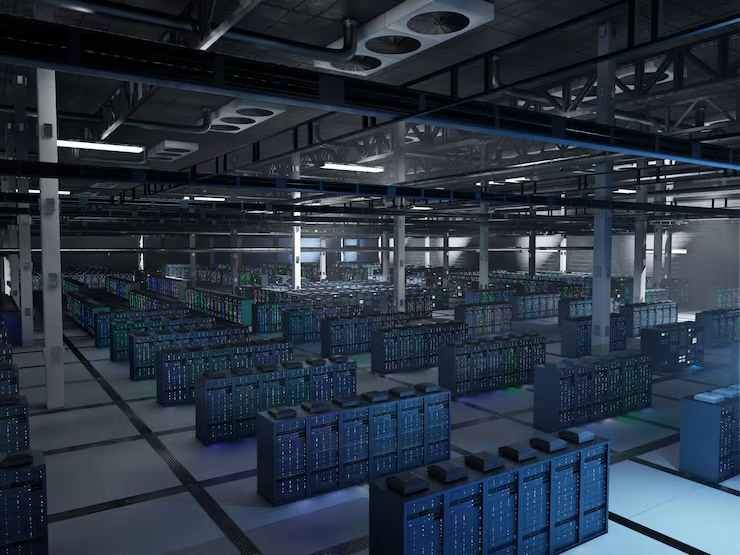
In the global race for artificial intelligence dominance, the most critical battleground is no longer just high-end semiconductor design or algorithmic innovation—it is physical infrastructure. To train and run complex AI models, modern tech giants require massive computing hubs powered by hundreds of thousands of specialized chips.
These facilities, known as hyperscale data centers, have rapidly transformed from background digital infrastructure into massive consumers of electricity and land.
A striking geopolitical divide has emerged in how the world’s two largest economies build this infrastructure. In the United States, data center expansion has hit a wall of local political opposition, environmental litigation, supply chain delays, and severe power grid bottlenecks.
Meanwhile, across the Pacific, China is deploying state-directed capital to build massive computing clusters at unprecedented speed, leveraging its state-owned power grid and vast renewable energy projects in its western provinces.
Examining this infrastructure race reveals how regulatory challenges, energy constraints, and strategic planning are shaping the global tech landscape.
SEO & Search Keywords Overview
For technology analysts, energy policy experts, tech investors, and international relations researchers, this article incorporates primary search terms and infrastructure concepts:
- Primary SEO Keywords:US China data center race, AI data center power demand, US power grid bottlenecks, China East-Data-West-Computing project, hyperscale data center infrastructure.
- Secondary SEO Keywords:data center electricity consumption inflation, renewable energy computing clusters, NIMBYism tech infrastructure, digital fatigue tech news, healthy habits energy efficiency.
The US Bottleneck: Local Resistance and Grid Realities
In the United States, the rush to build AI data centers has met severe real-world constraints. Tech companies face growing friction across three main areas:
[ US Data Center Expansion Hurdles ]
│
┌─────────────────────────────┼─────────────────────────────┐
▼ ▼ ▼
[ Power Grid Congestion ] [ Local Community Opposition ] [ Permitting & Supply Delays ]
Interconnection queues NIMBY lawsuits & zoning 100+ week lead times for
stretch 4 to 7 years. battles over water & noise. transformers & turbines.
- Interconnection Queues and Grid Limits
Regional grid operators across the US—including PJM Interconnection in the Mid-Atlantic and ERCOT in Texas—are facing unprecedented demands for new power hookups. In major data center hubs like Northern Virginia’s “Data Center Alley,” local utilities estimate that data center electricity demand could double or triple by the end of the decade, stretching existing transmission lines to their limits.
Getting a new multi-hundred-megawatt data center connected to the US power grid now frequently requires waiting 4 to 7 years for interconnection studies, grid upgrades, and transmission line construction.
- Local Zoning Fights and “NIMBY” Resistance
Across states like Virginia, Georgia, Arizona, and Maryland, local residents and environmental organizations are organizing to block data center developments. Concerns over noise pollution from industrial cooling fans, massive water consumption in drought-prone regions, and the potential restarting of fossil-fuel power plants to meet tech demand have turned data center permitting into a contentious political issue.
The Chinese Strategy: State-Directed Infrastructure and the Western Grid
While US developers navigate local regulatory challenges, China approaches data center expansion through top-down state planning and industrial policy.
[ China’s “East-Data-West-Computing” Strategy ]
│
▼
[ Eastern Tech Hubs ] ──(High-Speed Fiber)──► [ Western Energy Basins ]
(Beijing, Shanghai, Shenzhen) (Inner Mongolia, Ningxia, Gansu)
- Abundant Wind & Solar Power
- Cold Climates for Natural Cooling
- Direct State-Backed Power Grid Access
- The “East-Data-West-Computing” Initiative
Through its national strategic plan known as “East-Data-West-Computing” (Dongshu Xisu), Beijing is building massive, centralized data center hubs in resource-rich western regions like Inner Mongolia, Ningxia, Gansu, and Guizhou. These western clusters handle energy-intensive AI model training, while eastern economic hubs like Shanghai and Shenzhen focus on low-latency real-time applications.
- Direct Integration with Renewable Energy Megaprojects
China’s state-owned power grid operators work in direct coordination with state-backed telecom and tech firms. Massive solar and wind farms constructed in the Gobi Desert supply power directly to nearby computing parks. This bypasses long transmission delays and allows Chinese tech firms to scale physical data center capacity rapidly.
Regional Comparison: Infrastructure Execution & Resource Allocation
| Metric / Dimension | United States | China |
| Primary Project Bottleneck | Grid interconnection queues ($4\text{–}7\text{ years}$) and local permitting litigation. | International chip export controls and advanced semiconductor access. |
| Power Infrastructure Model | Fragmented, investor-owned utilities; slow regional transmission builds. | State-owned integrated power grid (State Grid Corp); rapid high-voltage transmission deployment. |
| Energy Source Mix | Mixed fossil fuels, nuclear, and growing solar/wind; subject to regional grid constraints. | Direct pairing with massive government-built wind and solar bases in western regions. |
| Local Regulatory Environment | High local autonomy; frequent municipal zoning fights and environmental challenges. | Centralized regional zoning and rapid land allocation under national development goals. |
Scientific Tips: Managing Cognitive Fatigue in a High-Stakes Tech Environment
Following fast-moving global news, market shifts, and technological disruptions can lead to cognitive fatigue and digital stress. Applying evidence-based focus management techniques helps preserve mental clarity:
[ Focus & Cognitive Balance Protocol ]
│
┌──────────────────────────┼──────────────────────────┐
▼ ▼ ▼
[ Digital Fasting Windows ] [ Information Batching ] [ Physical Movement Breaks ]
Set screen-free hours daily Check news summaries only Incorporate outdoor walks to
to lower mental strain. 1–2 times per day. reduce eye strain & cortisol.
- Practice Information Batching
Consuming continuous updates on global technology, supply chains, and economic shifts triggers sustained sympathetic nervous system activation, raising resting cortisol levels.
- Limit News Audits:Schedule specific 15-minute windows during the day to check technical and economic news, avoiding continuous live feed scrolling.
- Implement the “20-20-20” Vision Rule
Extended reading on backlit screens causes dry eyes, tension headaches, and visual fatigue. Every 20 minutes spent looking at a screen, shift your gaze to an object at least 20 feet away for 20 seconds to relax your eye muscles.
Healthy Tips: Promoting Energy Efficiency and Balance at Home
While global data center energy demands require industrial-scale solutions, adopting smart energy and digital habits at home supports both personal balance and environmental sustainability:
- Optimize Personal Digital Storage
Every photo, duplicate file, and unread email stored in cloud storage centers relies on active server hardware that consumes power 24 hours a day:
- Conduct a Cloud Cleanup:Periodically audit and delete unnecessary cloud backups, old video files, and redundant emails. Keeping your digital footprint lean helps reduce unnecessary server load.
- Create Clear Screen Boundaries
Establish screen-free routines around meals and bedtime. Disconnecting from digital devices 60 minutes before sleep supports natural melatonin release, leading to deeper, more restorative rest.
The Path Ahead
The global race for AI leadership extends far beyond software design—it is a contest of physical infrastructure, energy production, and regulatory speed. While the US relies on market-driven innovation, it faces growing grid and community challenges. Meanwhile, China leverages state-directed planning to build computing power rapidly, even as it navigates international hardware restrictions.
How both nations resolve these energy, environmental, and infrastructure demands will play a major role in shaping the future of global technology.